Soundproof office pods: flexibility, architecture, and acoustic comfort with Ultralight
Published on: 2 February, 2026
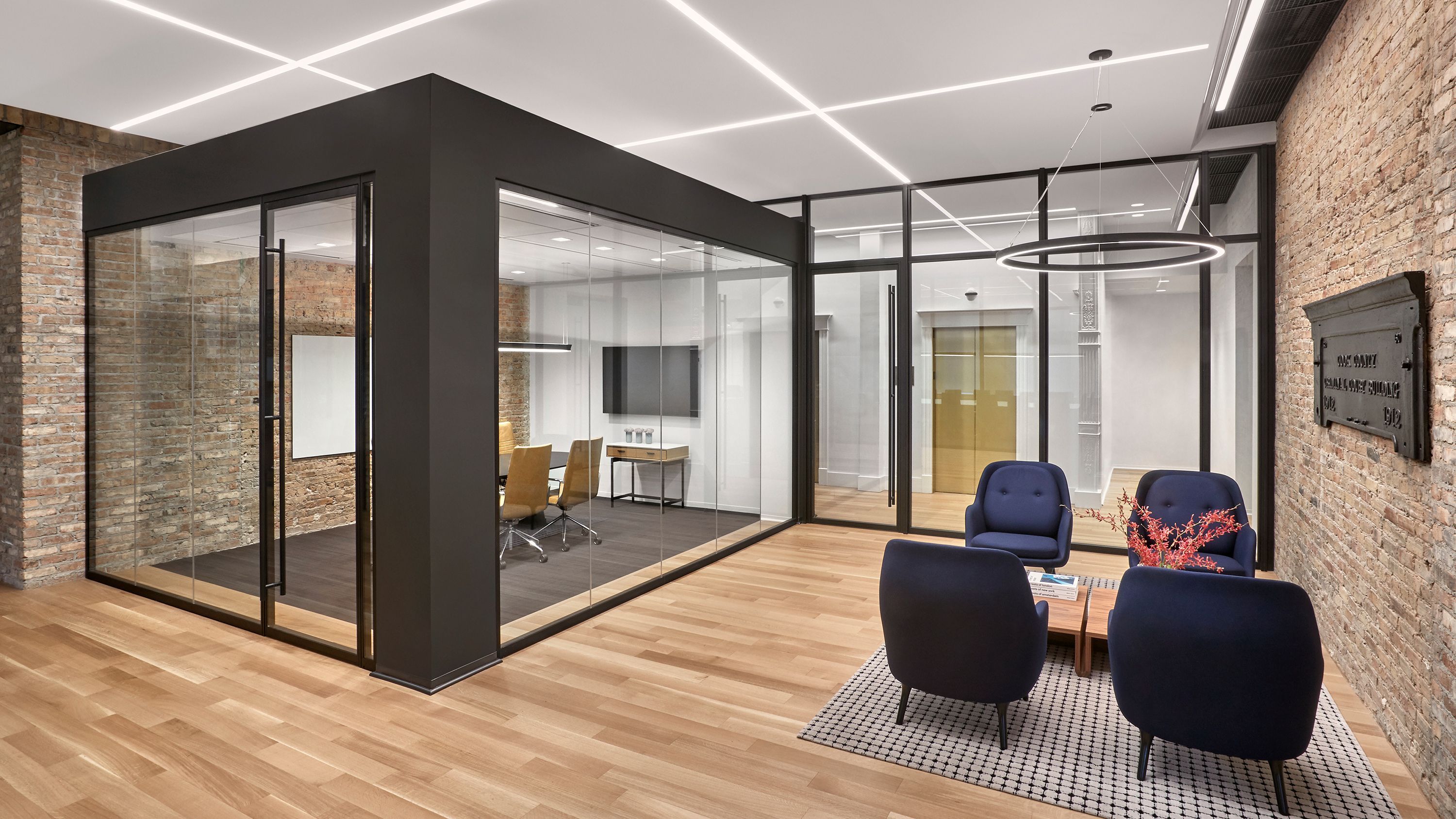
In contemporary workplace design, soundproof office pods have become one of the most discussed solutions for addressing the growing complexity of how offices are used. Hybrid work models, open-plan layouts, and activity-based environments require spaces that can adapt quickly while still offering moments of privacy, focus, and acoustic comfort. Rather than relying on permanent construction, companies and architects increasingly turn to freestanding solutions that can be integrated, reconfigured, and evolved over time.
At IOC project partners, we approach soundproof office pods not as isolated objects, but as architectural elements derived from a partition wall system. With Ultralight, our modular glass partition system, the pod becomes a natural extension of the wall: flexible, refined, and fully integrated into the spatial language of the office. The result is a freestanding structure that delivers comfort and performance while maintaining visual coherence and design continuity.
From partition wall to freestanding architecture: the flexibility of Ultralight
The key strength behind Ultralight-based soundproof office pods lies in the flexibility of the system itself. Ultralight was originally developed as a modular partition wall capable of adapting to highly complex architectural environments. Over time, its structural logic and extensive profile library have allowed it to evolve into a system that supports fully freestanding solutions without compromising performance or design quality.
Unlike prefabricated pods with fixed dimensions and aesthetics, Ultralight allows architects to design soundproof office pods that respond precisely to the space in which they are placed. Shape, size, height, and layout can all be customized. Straight or curved walls, single-glass or double-glass panels, solid elements, and hybrid configurations can be combined to create pods that feel architectural rather than additive.
What makes this approach particularly valuable is that freestanding Ultralight pods retain all the elements of a traditional partition wall system. Sliding doors, swing doors, solid panels, transparent surfaces, and curved geometries can all be integrated seamlessly. This means that soundproof office pods do not appear as foreign objects within the office, but as coherent extensions of the overall design concept.
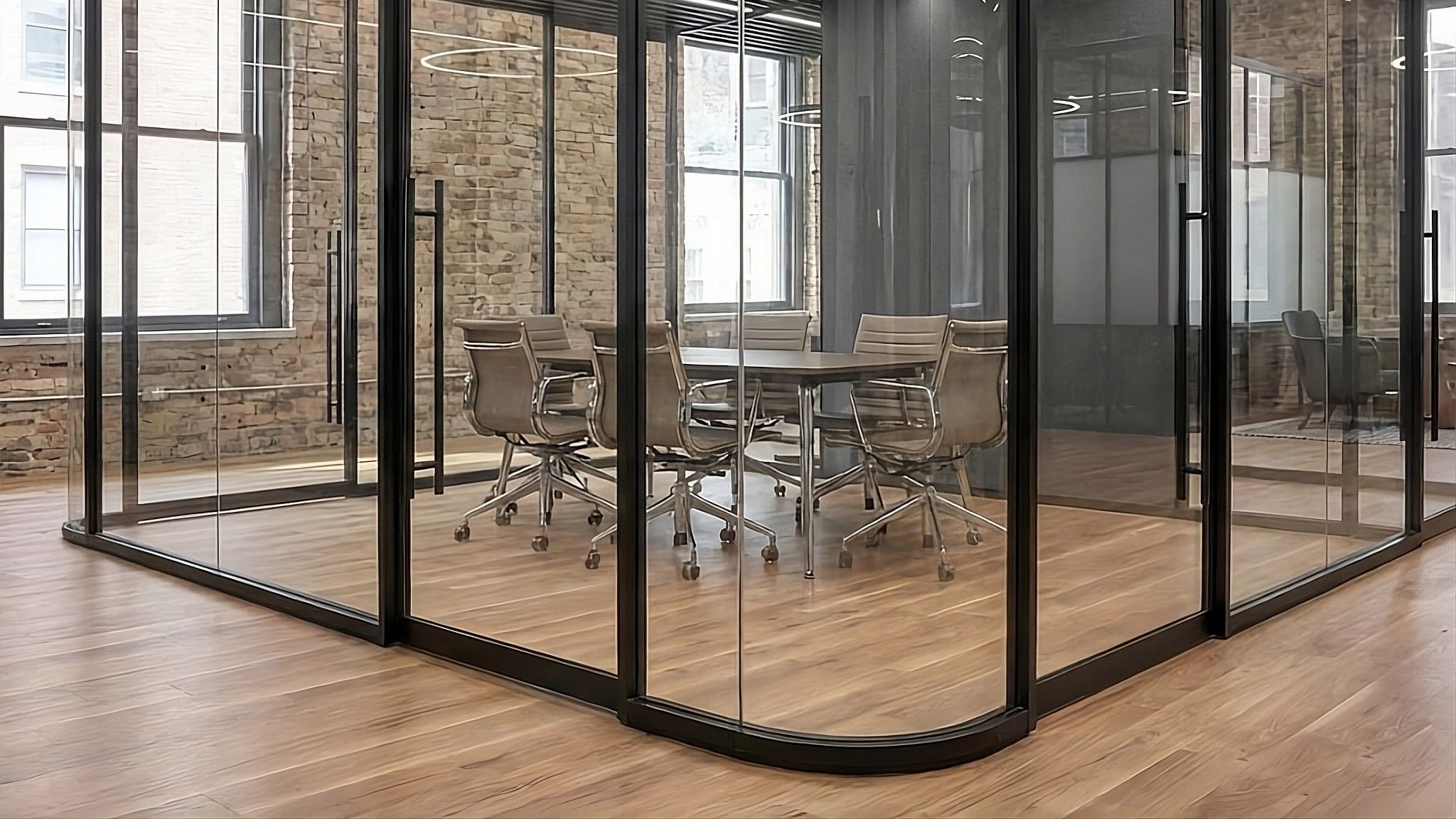
Because Ultralight is modular, these pods can also adapt over time. As organizational needs change, pods can be repositioned, resized, or reconfigured without the need for demolition. This flexibility supports long-term planning and reduces waste, aligning with contemporary expectations around sustainability and adaptability in workplace design. In this sense, Ultralight transforms the idea of the pod from a static enclosure into a living architectural system, capable of evolving alongside the workplace itself.
Soundproof office pods as acoustic comfort, not isolation
When discussing soundproof office pods, it is important to redefine what "soundproof" truly means in a modern office context. Absolute acoustic isolation is rarely the goal. Instead, the focus is on achieving the right level of acoustic comfort, calibrated to the specific activities taking place inside the pod and the surrounding environment. At IOC project partners, we approach soundproofing as a modulable concept. With Ultralight, acoustic performance can be managed and adjusted based on client requirements, building constraints, and usage scenarios. Alongside glass surfaces, Ultralight allows the integration of solid acoustic panels, and dedicated ceiling solutions within the pod structure.
This approach allows soundproof office pods to support a wide range of functions: focused individual work, video calls, confidential meetings, or small collaborative sessions. The goal is not to create isolation, but to provide a controlled acoustic environment where concentration and communication can coexist comfortably.
Visual openness plays a crucial role in this balance. Glass surfaces ensure that pods remain connected to the surrounding space, avoiding the feeling of isolation often associated with enclosed rooms. At the same time, acoustic comfort enhances the psychological perception of privacy, making users feel protected without being disconnected. By transferring the acoustic logic of a high-performance partition wall into a freestanding structure, Ultralight-based soundproof office pods achieve a refined equilibrium between performance and design. Acoustic comfort becomes an integral part of the architecture, not an afterthought.
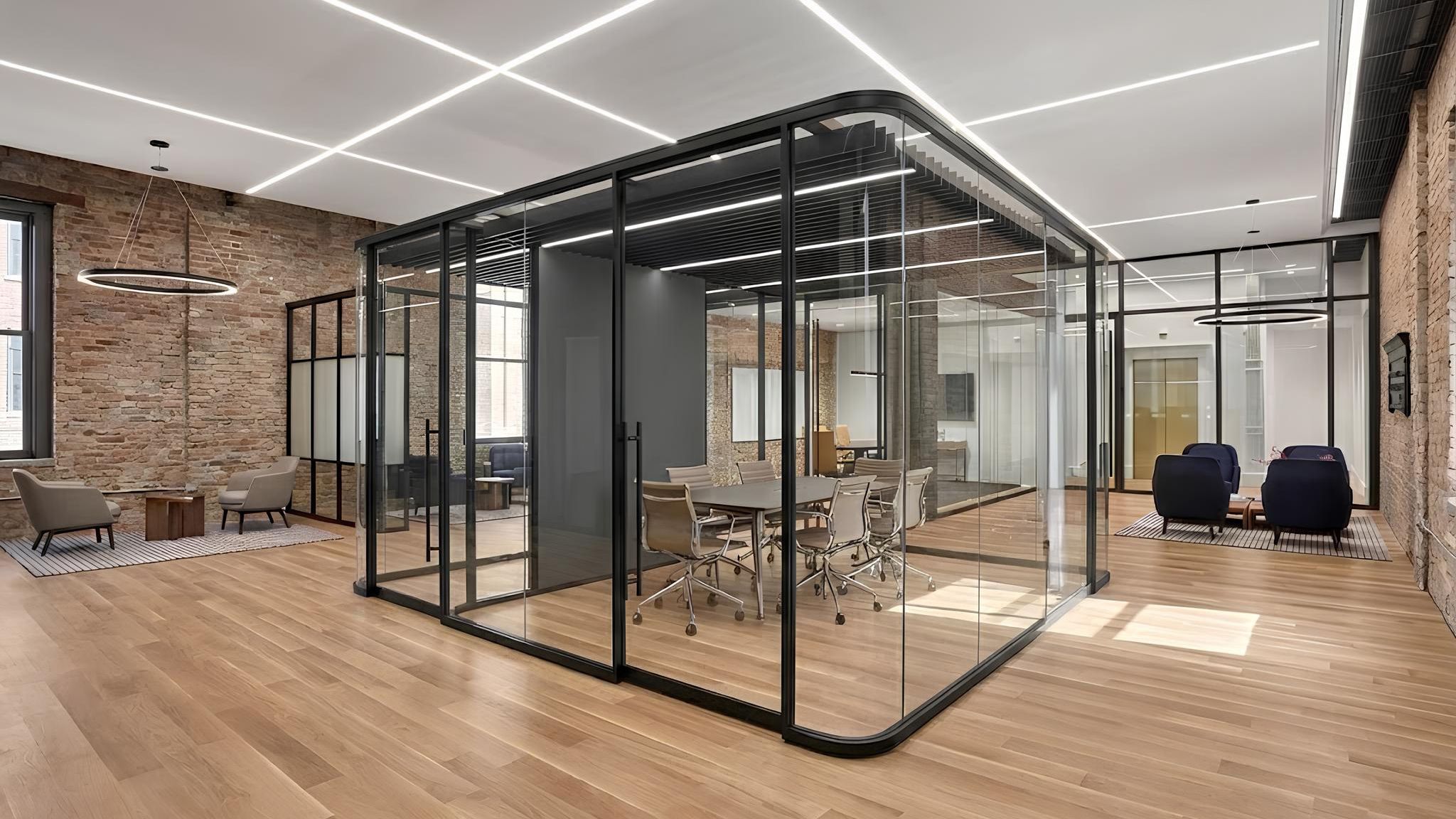
A contemporary interpretation of soundproof office pods
Today's workplaces demand solutions that are flexible, human-centered, and visually coherent. Soundproof office pods, when designed as architectural systems rather than standalone products, respond perfectly to this demand. With Ultralight, IOC project partners translates the language of partition walls-precision, modularity, and elegance-into freestanding structures that support modern ways of working.
By allowing architects to design pods with the same freedom as walls, Ultralight ensures that soundproof office pods can integrate curves, glass, solid panels, sliding or swing doors, and customized finishes. This continuity reinforces the overall spatial identity of the office, creating environments that feel intentional and well-balanced.
Ultimately, Ultralight demonstrates that the future of soundproof office pods is not about closed boxes, but about adaptable architecture. Pods become spaces within the space: flexible, comfortable, and designed to evolve. Through acoustic comfort, modular design, and architectural clarity, Ultralight offers a contemporary interpretation of how offices can support focus, collaboration, and well-being-today and in the years to come.